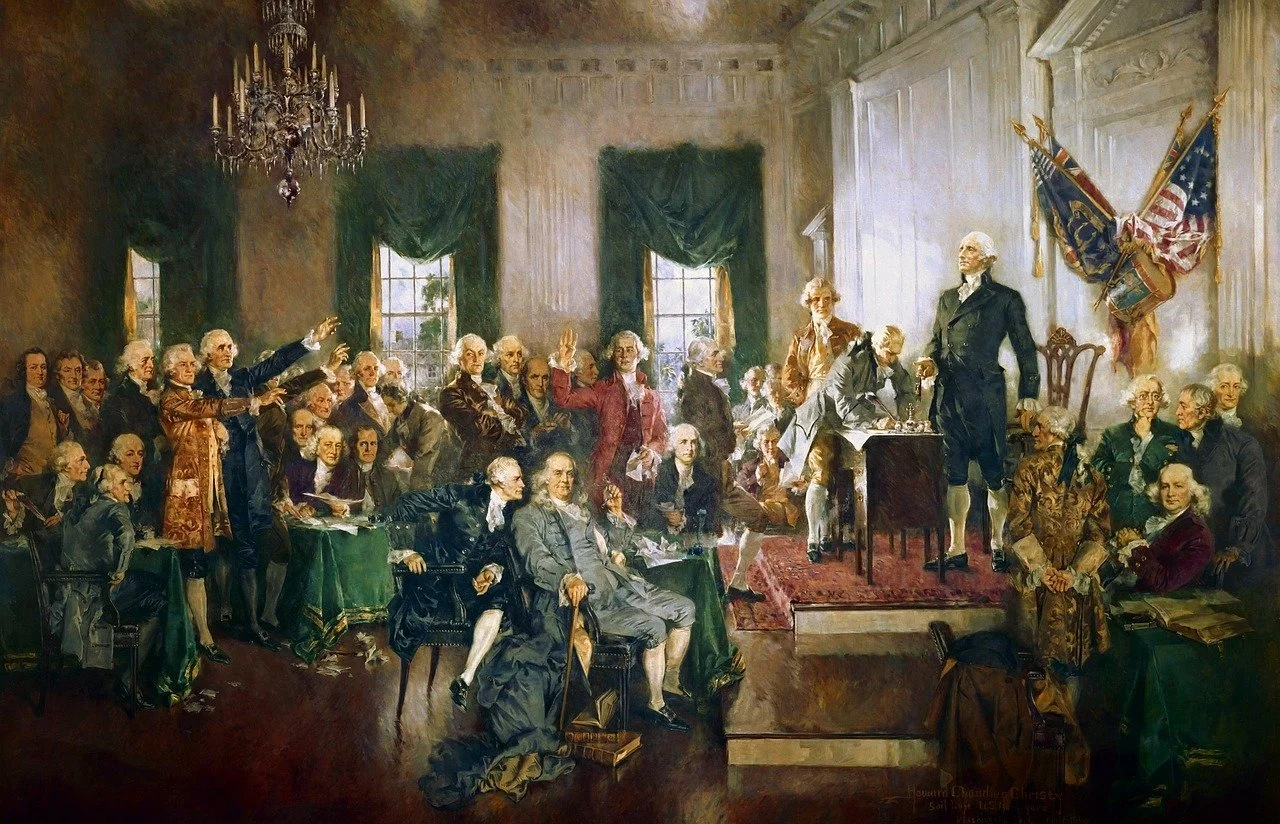

Why George Washington “Walked Away” Twice is the Epitome of President’s Day Weekend
I genuinely love Presidents’ Day. Not as a long weekend or a retail event, but as a moment to pause and think about leadership, character, and restraint. For me, that reflection almost always centers on George Washington.
I have been fascinated by Washington for as long as I can remember. Over the years, I have read multiple biographies and watched more historical and biographical programs than I can count. Each time, I come away with a deeper appreciation for the same core truth. What made Washington extraordinary was not simply that he led.
It was that he knew when to stop leading.
We often talk about Washington as the father of our country, and rightly so. But we tend to focus on what he achieved rather than what he refused to take. After winning the Revolutionary War, Washington was a national hero. He commanded the loyalty of an army and the admiration of a fragile new nation. In many places and times in history, that is the moment when power hardens. Instead, he resigned his commission and returned to private life. He walked away when he could have claimed almost anything.
That decision alone would place him in rare company. But he did it again.
When Washington became president, there was no roadmap. He was not just holding an office. He was defining it. After two terms, his popularity remained strong. He could have easily continued. Many expected him to. Instead, he stepped aside voluntarily, reinforcing the idea that leadership is temporary and that institutions matter more than individuals.
That choice shaped the presidency as much as any policy decision. It established a norm of restraint that would guide the country for generations. Washington understood something that is still difficult for leaders today. Power is most dangerous when it becomes personal. His greatness came not from how much authority he accumulated, but from how intentionally he released it.
This is why Washington remains one of my heroes. Not because he was perfect, or without contradiction, but because he consistently chose the long view. He understood that the future of the nation depended on leaders who knew when enough was enough.
We do not talk about that aspect of leadership nearly enough. We celebrate ambition, scale, and dominance. We spend far less time honoring restraint, humility, and the courage to walk away.
Presidents’ Day gives us a chance to remember that the strength of our democracy was shaped not just by those who sought power, but by at least one leader who repeatedly chose to give it up.
That lesson remains as relevant today as it was more than two centuries ago.