The AI Challenge in Education
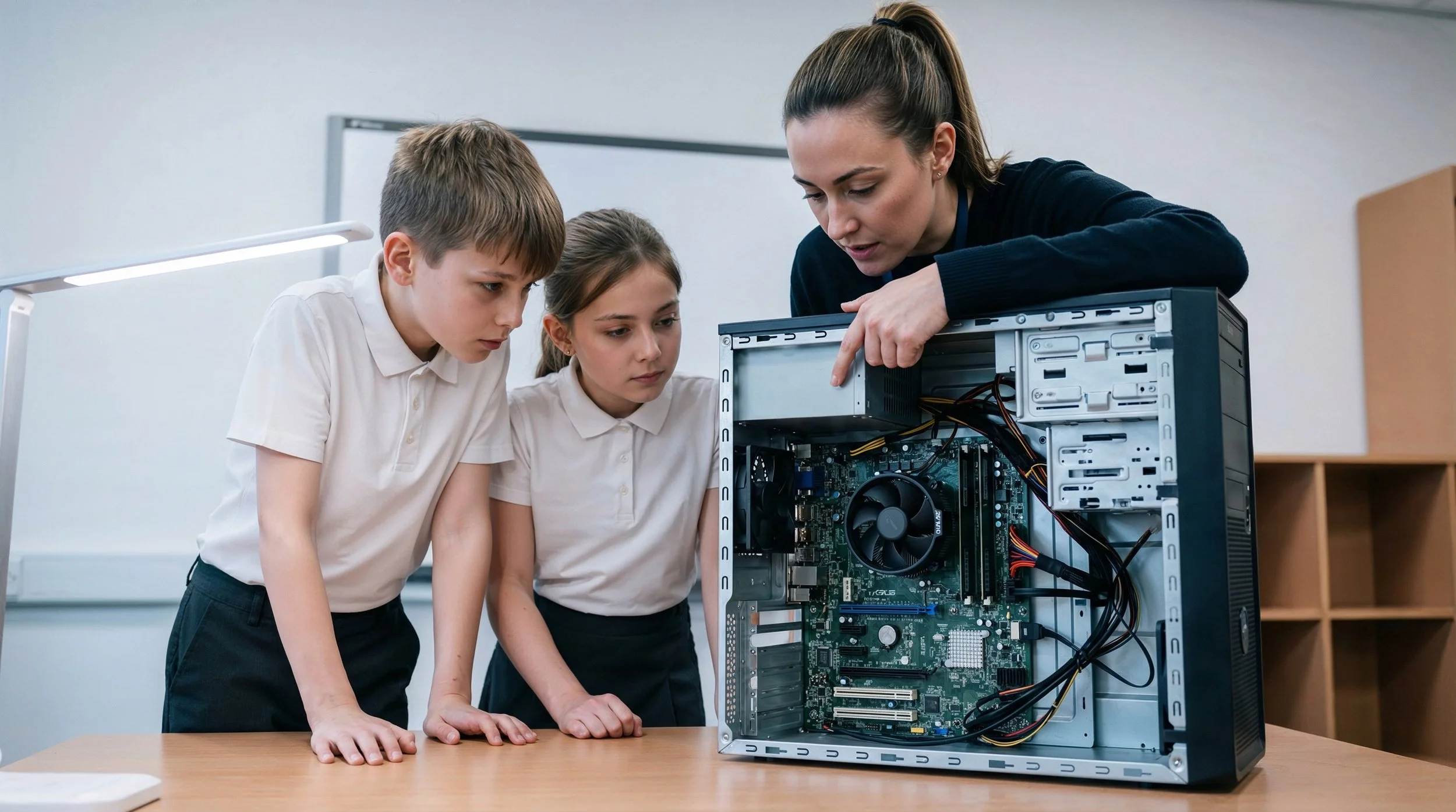
Our son enters seventh grade this fall. Along with the usual questions about teachers, schedules, activities, and friends, there is a new issue becoming part of his education: artificial intelligence. Our school district is finally developing a policy for how students can use AI. I am glad they are addressing it. I also recognize the uncomfortable reality behind the policy. AI cannot simply be avoided. To elevate that thought, this summer our soon to be 7th grader (then) took a week long camp on AI offered by a university….not the way I spent my summer years ago.
As parents, we have been fairly restrictive about our son's use of AI (and that of our daughter). He needs to learn how to write before having technology rewrite something for him. He needs to work through a difficult math problem before asking a computer to solve it. He needs to learn how to research, organize information, develop an argument, and occasionally struggle with an assignment.
That struggle matters.
At the same time, we are already hearing stories about kids his age using AI far more liberally. Homework questions go into AI. Writing assignments get substantial AI assistance. Research gets condensed into an instant answer. Some students are undoubtedly using it in ways their teachers never intended and may never know. Maybe the change to limit access throughout the school district inside the schools will help curtail the usage of AI.
But today word and tomorrow’s future creates an enormous challenge for schools.
For generations, teachers could reasonably assume that the essay submitted by a student was written by that student. The homework represented the student's work. The research process required the student to actually research. AI complicates all of those assumptions. Trying to solve the problem by banning AI will have limited success. Students can access these tools outside school, on personal devices, and through an expanding number of applications. Schools will need rules, but they will also need to teach students how and when AI should be used.
That distinction may become one of the central educational questions of the next decade.
There are legitimate uses. AI can explain a difficult concept differently, help a student brainstorm, provide feedback on writing, or help organize ideas. Some schools are already developing frameworks that distinguish among using AI for clarification, planning, assistance, and revision while still requiring students to acknowledge its use.
The concern for me as a parent is what happens when assistance becomes substitution.
Education involves developing the ability to think. Writing forces students to organize thoughts. Reading builds comprehension. Solving problems develops reasoning. Research teaches students to evaluate information. If AI removes too much of that work, students may complete more assignments while developing fewer of the abilities those assignments were designed to build.
Our son (and his younger sister) will need to understand AI. His generation will probably use it throughout college and their careers. Keeping him completely away from it would leave him unprepared. But seventh grade should still involve learning how to think without asking a machine to do the thinking first.
Schools, teachers, parents, and students are going to spend years trying to find that boundary. I suspect the policy our district adopts this year will be rewritten many times. That is probably appropriate. The technology is moving too quickly for any policy to be permanent.
The larger goal should remain much more stable: use AI to help our children learn while protecting the intellectual work required to actually become educated.