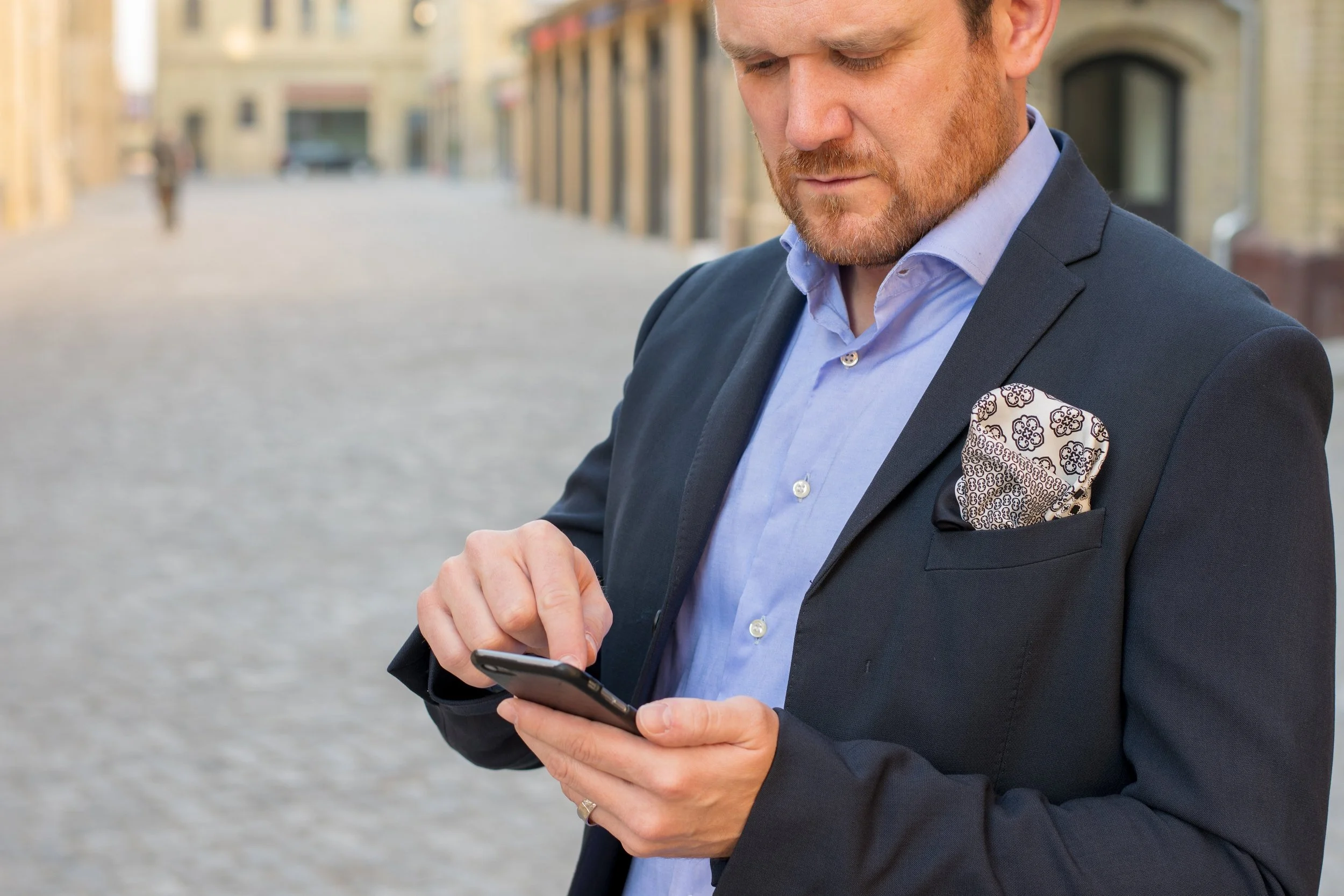

When Did Answering the Phone Become a Risk?
I am officially tired of phishing calls and text messages. What was once an occasional annoyance has become a daily intrusion, and I suspect I am far from alone.
On average, I receive two calls a day from someone who needs just a little more information to finalize my loan application. The voicemail sounds professional, sometimes even urgent. There is just one small problem. I never applied for a loan.
Then come the text messages. Apparently, I have purchased something, and there is a problem with the transaction. Or a package cannot be delivered until I verify some information. Once again, I have purchased nothing, ordered nothing, and have no idea what they are talking about.
My response is always the same. I block the number. Problem solved, right?
Not even close.
The next day, the same message arrives from a different number. Another call. Another voicemail. Another attempt to get me to respond. I block that number, too. The cycle continues.
It has reached the point where I no longer answer my phone unless the caller is in my contacts or I am absolutely certain I recognize the number. Think about that for a moment. We have taken one of the most useful communication tools ever invented and turned it into something people are afraid to answer.
I use my phone for business. I have clients, colleagues, friends, and prospective clients who might legitimately need to reach me. Yet the sheer volume of fraudulent communication has conditioned me to assume that an unfamiliar number is probably another scam. How many legitimate conversations never happen because we have stopped trusting our phones?
And then I think about my mom.
Like many older adults, she did not grow up with smartphones, online banking, text messages, and the endless stream of technology we navigate every day. She uses technology, but recognizing a sophisticated scam is not always straightforward.
Imagine receiving a voicemail from someone who sounds convincing and says your loan is almost approved. Or a text claiming your bank account has been compromised and immediate action is required. And because of my podcast and public speaking, we have “code” words in case she ever doubts I am calling….when it is not me….for money.
For someone less comfortable with technology, the distinction between a legitimate message and a fraudulent one can be difficult to recognize. The pressure to respond quickly makes the situation worse. And that concerns me far more than the inconvenience of blocking another number.
We can tell people to be careful. We can remind them never to provide personal information over the phone, click suspicious links, or respond to unexpected requests. Those are sensible precautions.
But how much responsibility should fall on individuals to defend themselves against an apparently endless stream of fraudulent communication? Telephone companies, financial institutions, technology providers, and regulators all have roles in addressing this problem. Whatever solutions they pursue, the current experience is unacceptable.
I would simply like to answer my phone again without wondering whether the person on the other end is trying to steal my money or my identity.
Is that really too much to ask?